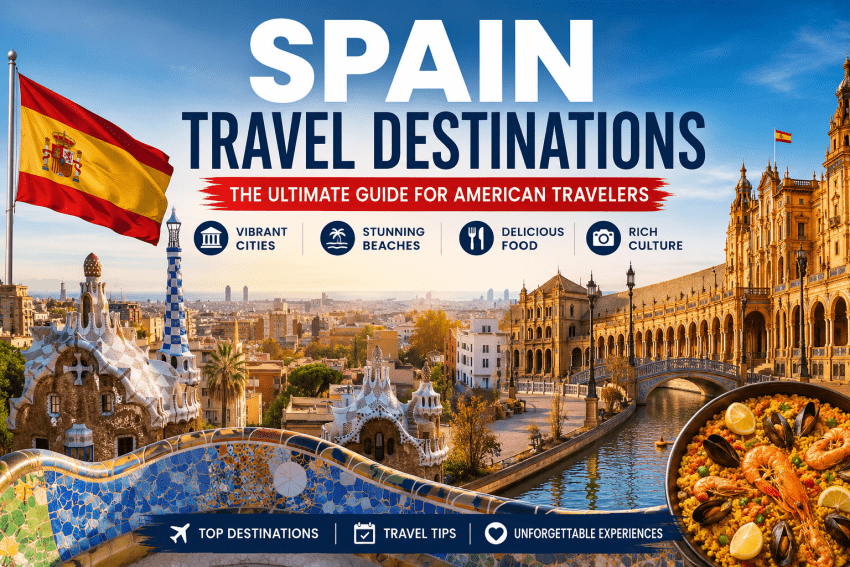
Why Spain Continues to Attract American Travelers
Choosing a European destination can feel like standing before an enormous buffet. Italy offers history, France delivers romance, and Greece promises islands and sunshine.
Spain somehow manages to combine all of those experiences into a single country. For American travelers seeking culture, beaches, architecture, nightlife, and excellent food, Spain is often the perfect choice.
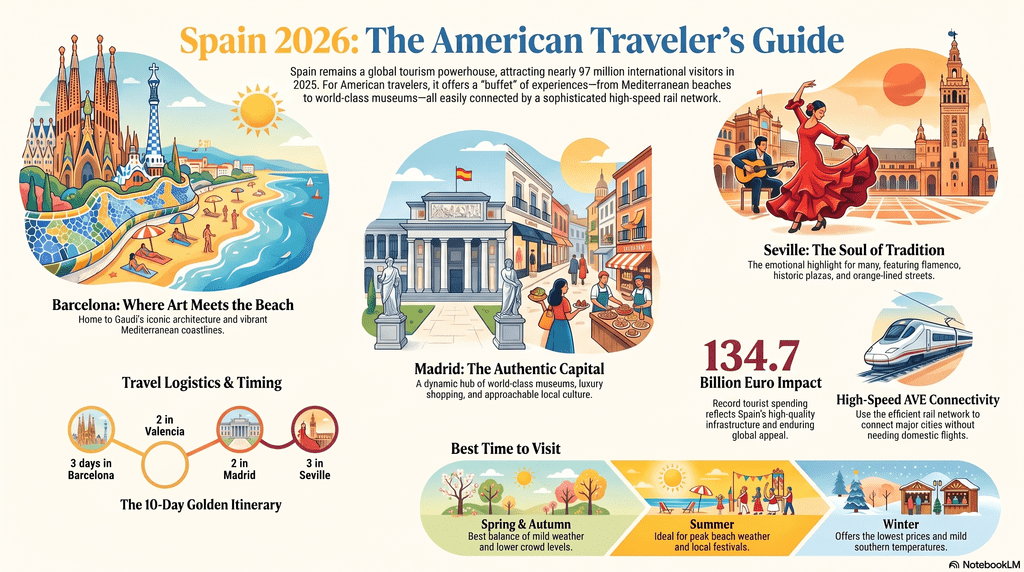
Spain recorded nearly 97 million international visitors in 2025, proving that demand for Spanish tourism continues to grow year after year. Tourist spending reached approximately €134.7 billion, highlighting the country’s strong global appeal. American tourism has also increased as travelers seek longer international vacations and authentic cultural experiences.
What makes Spain especially attractive for Americans is its diversity. Traveling from Barcelona to Seville feels almost like visiting two different countries. The food changes, the architecture changes, the climate changes, and even the languages spoken in certain regions change. Few countries offer such variety within relatively short travel distances.
Barcelona: Where Art Meets the Mediterranean
Barcelona feels like someone mixed an open-air museum with a beach resort and then added incredible food. For many Americans, Barcelona becomes their first experience with Spain, and it rarely disappoints.
The city combines stunning architecture, beautiful beaches, and a lively cultural scene. The influence of Antoni Gaudí can be seen throughout the city, creating an atmosphere unlike any other destination in Europe. Walking through Barcelona feels like entering a living work of art.
Popular attractions include:
| Attraction | Why Visit |
|---|---|
| Sagrada Familia | Iconic architecture |
| Park Güell | Colorful artistic designs |
| Gothic Quarter | Historic streets |
| Barceloneta Beach | Mediterranean relaxation |
| La Rambla | Shopping and entertainment |
Barcelona also faces challenges associated with overtourism, which has encouraged visitors to explore neighborhoods beyond the traditional tourist areas. Travelers who venture farther often discover authentic restaurants, local markets, and quieter experiences.
Madrid: Spain’s Dynamic Capital
Madrid is the engine of Spain. While Barcelona often receives more international attention, many experienced travelers argue that Madrid offers a more authentic Spanish experience.
The city combines elegant architecture, outstanding museums, beautiful parks, and vibrant nightlife. Unlike many European capitals, Madrid feels approachable. Locals fill the parks, cafes stay busy late into the night, and visitors quickly adapt to the city’s relaxed pace.
Madrid attracted more than 11 million visitors in 2025, demonstrating its growing popularity among international travelers. The city’s luxury shopping districts, cultural events, and expanding entertainment scene continue attracting visitors from North America.
Museums such as the Prado and Reina Sofía provide world-class artistic experiences, while neighborhoods like Malasaña and La Latina offer local dining and nightlife opportunities.
Seville: The Soul of Southern Spain
If Spain had a soundtrack, Seville would probably be playing it. The city represents many of the images people imagine before visiting Spain: flamenco dancers, orange trees, horse-drawn carriages, and historic plazas.
Seville provides a slower rhythm compared to Madrid and Barcelona. Visitors spend evenings walking through narrow streets, enjoying tapas, and listening to guitar performances that seem to appear from nowhere.
The Alcázar, Seville Cathedral, and Plaza de España attract millions of visitors each year. Yet the true beauty of Seville often emerges after sunset when residents gather outdoors, and the city begins to feel like one giant neighborhood.
For American visitors seeking traditional Spanish culture, Seville frequently becomes the emotional highlight of the trip.
Granada and the Alhambra
Granada offers one of Spain’s most fascinating historical experiences. Located near the Sierra Nevada mountains, the city combines Spanish and Islamic influences that create a truly unique atmosphere.
The Alhambra remains one of Europe’s most visited monuments. Its palaces, gardens, and intricate designs attract travelers from around the world. Walking through the complex feels like stepping backward through centuries of history.
Granada also offers exceptional value. Many restaurants continue the local tradition of serving complimentary tapas with drinks, making the city particularly attractive for budget-conscious travelers.
The surrounding mountains, historic neighborhoods, and relaxed pace make Granada a destination that often exceeds expectations.
Valencia: Spain’s Underrated Treasure
Valencia quietly delivers many of the advantages travelers seek without some of the crowds found elsewhere. The city offers beaches, modern architecture, excellent food, and a lower cost of travel.
As the birthplace of paella, Valencia holds special significance for food lovers. The city’s markets, restaurants, and culinary traditions provide experiences that feel both authentic and approachable.
The City of Arts and Sciences showcases modern Spanish architecture, while the historic center offers traditional experiences. Beaches remain easily accessible, allowing travelers to combine sightseeing with relaxation.
Many travelers who visit Valencia describe it as Spain’s hidden gem because it balances tourism infrastructure with local character.
Mallorca and the Balearic Islands
Sometimes travelers simply want sunshine, beaches, and beautiful scenery. Mallorca delivers all three.
The island offers crystal-clear water, luxury resorts, mountain villages, and scenic coastlines. Visitors can spend mornings hiking through the Tramuntana Mountains and afternoons relaxing beside the Mediterranean.
The Balearic Islands continue attracting international visitors because they combine natural beauty with high-quality tourism infrastructure. The islands remain among Spain’s leading tourism destinations.
For American travelers seeking both relaxation and adventure, Mallorca provides an ideal combination.
San Sebastián: Spain’s Culinary Capital
Food often becomes one of the strongest memories from a trip to Spain. In San Sebastián, food becomes the destination itself.
Located in northern Spain, the city possesses one of the highest concentrations of Michelin-starred restaurants in the world. Its famous pintxos bars allow visitors to sample small dishes while exploring local neighborhoods.
The city’s beautiful beaches and coastal scenery complement its culinary reputation. Travelers frequently describe San Sebastián as one of Europe’s finest food destinations.
For visitors who plan vacations around dining experiences, this city deserves a place on the itinerary.
Best Time to Visit Spain
Spain offers year-round travel opportunities, although each season creates different experiences.
| Season | Advantages |
|---|---|
| Spring | Mild weather and fewer crowds |
| Summer | Beaches and festivals |
| Autumn | Comfortable temperatures |
| Winter | Lower prices and mild southern weather |
Shoulder seasons such as spring and fall often provide the best balance between weather, prices, and crowd levels.
Some destinations have also begun encouraging travelers to visit during off-peak periods as part of Spain’s sustainable tourism initiatives.
Transportation in Spain
Spain’s transportation network makes multi-city travel relatively simple. High-speed trains connect major destinations efficiently, allowing travelers to avoid domestic flights.
The AVE rail network links Madrid with Barcelona, Seville, Valencia, and other important destinations. Urban transportation systems in major cities remain affordable and easy to navigate.
Many American visitors discover that they need a rental car only when exploring rural areas or smaller coastal regions.
Sample 10-Day Spain Itinerary for Americans
Days 1–3: Barcelona
Architecture, beaches, museums, and local cuisine.
Days 4–5: Valencia
Paella, beaches, and modern attractions.
Days 6–7: Madrid
Museums, shopping, and cultural experiences.
Days 8–10: Seville or Granada
Traditional Andalusian experiences.
This itinerary allows travelers to experience multiple regions while minimizing travel fatigue.
Conclusion
Spain continues to attract millions of international visitors because it offers a remarkable variety within one country. Travelers can experience beaches, mountains, world-class museums, medieval neighborhoods, modern architecture, and extraordinary cuisine within a single trip.
Recent tourism statistics demonstrate Spain’s continuing popularity, with nearly 97 million international visitors arriving during 2025. American travelers remain an increasingly important segment of this growth.
Whether you prefer the artistic streets of Barcelona, the energy of Madrid, the traditions of Seville, or the beaches of Mallorca, Spain delivers experiences that stay with travelers long after they return home.
Frequently Asked Questions
1. How many days should Americans spend in Spain?
Ten to fourteen days allow visitors to experience multiple regions comfortably.
2. Is Spain expensive for Americans?
Spain is generally more affordable than many Western European countries.
3. What is the safest city in Spain for tourists?
Most major cities are considered safe, although visitors should remain aware of pickpocketing in crowded areas.
4. Do Americans need to speak Spanish?
English is widely spoken in tourist areas, though basic Spanish phrases improve the experience.
5. Which Spanish city is best for first-time visitors?
Barcelona often serves as the ideal introduction because it combines culture, beaches, and excellent transportation.